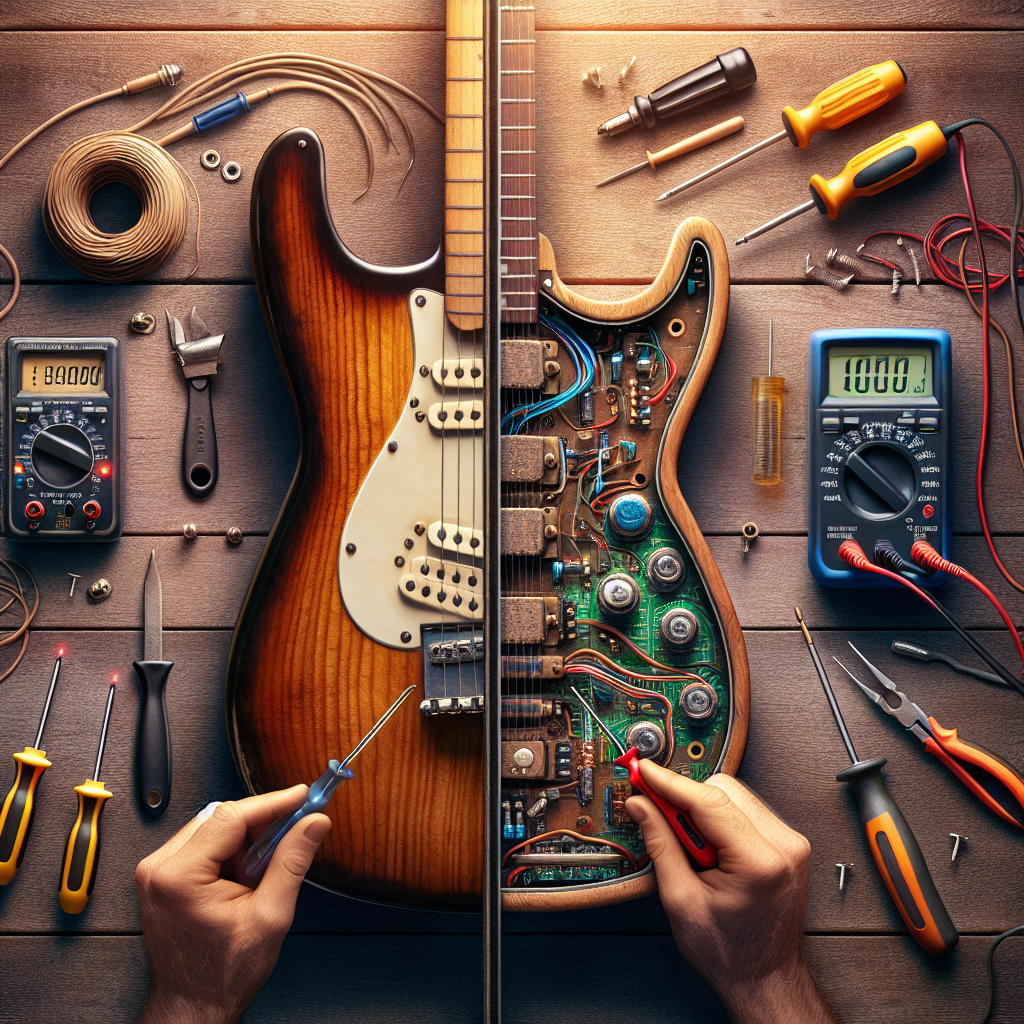
Differences Between Vintage and Modern Wiring
Guitar enthusiasts often delve deep into the intricacies of their instruments, tweaking and modifying for the perfect sound. Among such tweaks, the wiring of a guitar—especially in the case of iconic models like the Telecaster—can significantly impact tone and playability. But what is the difference between vintage and modern wiring? This post will unravel the intricacies, benefits, and applications of both styles of wiring for guitar aficionados.
1. Introduction to Vintage Wiring
Vintage wiring, commonly referred to as “50s wiring,” is how electric guitars were wired in the early days of their production during the 1950s and 1960s. This method involves connecting the tone capacitor directly to the output (volume) rather than to the potentiometer. The advantage? A sweeter, more open tone, especially at reduced volume, allowing guitarists to enjoy smoother transitions without a drop in treble.
The quintessential warmth and character of vintage guitars are often attributed to this wiring method. Players seeking that classic rock and roll sound tend to gravitate towards it, noting the retention of tonal clarity that accompanies even when the volume is dialed down.
2. Exploring Modern Wiring
Contrasting the vintage method, modern wiring is how most electric guitars have been wired since the 1970s. Here, the tone capacitor is connected to the switch, independent of the volume pot. This results in a loss of treble frequencies when the volume is reduced, often making the sound appear muddy or less articulate.
Despite this downside, modern wiring allows for a more straightforward circuit path and lends itself well to heavier, high-gain playing styles commonly associated with contemporary rock and metal. The pronounced mid-range punch makes power chords and chunky riffs stand out impressively in this configuration.
3. Tone Capacitor Placement and Its Impact
One of the critical differences in these wiring styles is the placement of the tone capacitor. In vintage wiring, placing the capacitor after the volume control preserves treble frequencies more effectively during volume adjustments. This is less so in modern wiring, where the varying load on the tone circuit tends to absorb more treble at reduced volumes.
For tinkerers, experimenting with different capacitor values in these setups can further enhance or diminish certain tonal aspects, providing a wide range of sound personalization.
4. The Role of Potentiometers
The potentiometers used in wiring also play a crucial role in shaping a guitar’s tone. Vintage guitars often use potentiometers with higher resistance (e.g., 500k ohms), leading to a brighter sound, while modern schemes might use lower values (e.g., 250k ohms) for a warmer tone.
Choosing the right potentiometer balance can make or break the overall tonal result, whether you’re after that vintage twang or modern roar.
5. Making the Switch: Which is Right for You?
The choice between vintage and modern wiring boils down to personal preference and playing style. If you’re after that classic, clear tone reminiscent of early rock legends, vintage wiring might be your best bet. However, if modern music’s fuzz and grind resonate with you, then modern wiring fits the bill.
Switching between the two can be an exhilarating way for players to explore the breadth of their instrument’s abilities, unleashing new sonic possibilities.
FAQs
- What is the main tonal difference between vintage and modern wiring?
Vintage wiring retains treble better at lower volumes, offering a clearer tone, while modern wiring tends to lose treble, resulting in a muddier sound. - Can I change my guitar’s wiring from vintage to modern or vice versa?
Yes, with some basic soldering skills or assistance from a professional luthier, you can switch between the two wiring styles. - Do wiring styles affect pickup selection?
Yes, generally, pickups that complement your chosen wiring style will help you achieve the best possible sound. - Is there a cost difference between vintage and modern wiring?
The actual components (like capacitors and potentiometers) involved in both settings are relatively inexpensive; however, custom jobs involving professional help might increase costs. - Does wiring change apply to all types of guitars?
While more common in electric guitars, both vintage and modern wiring can be applied to any guitar with electronic components, like basses and some acoustics with pickups. - Are there hybrid wiring options available?
Yes, many players experiment and find a blend of vintage and modern wiring that suits their personal tone preferences, combining the best features of both.
Conclusion
Whether you’re a fan of the soulful strums of a vintage Telecaster or the heavy, driving riffs of modern rock guitars, understanding the differences in wiring can lead you to discover nuanced soundscapes and broader creativity. The choice between vintage and modern wiring is not only a technical decision but a personal one that defines your guitar’s voice. Embrace both styles to curate your ultimate tone, and don’t hesitate to experiment along the way!
For more in-depth information on guitar wiring, check out this comprehensive guide to Telecaster Wiring Tips for more insights.