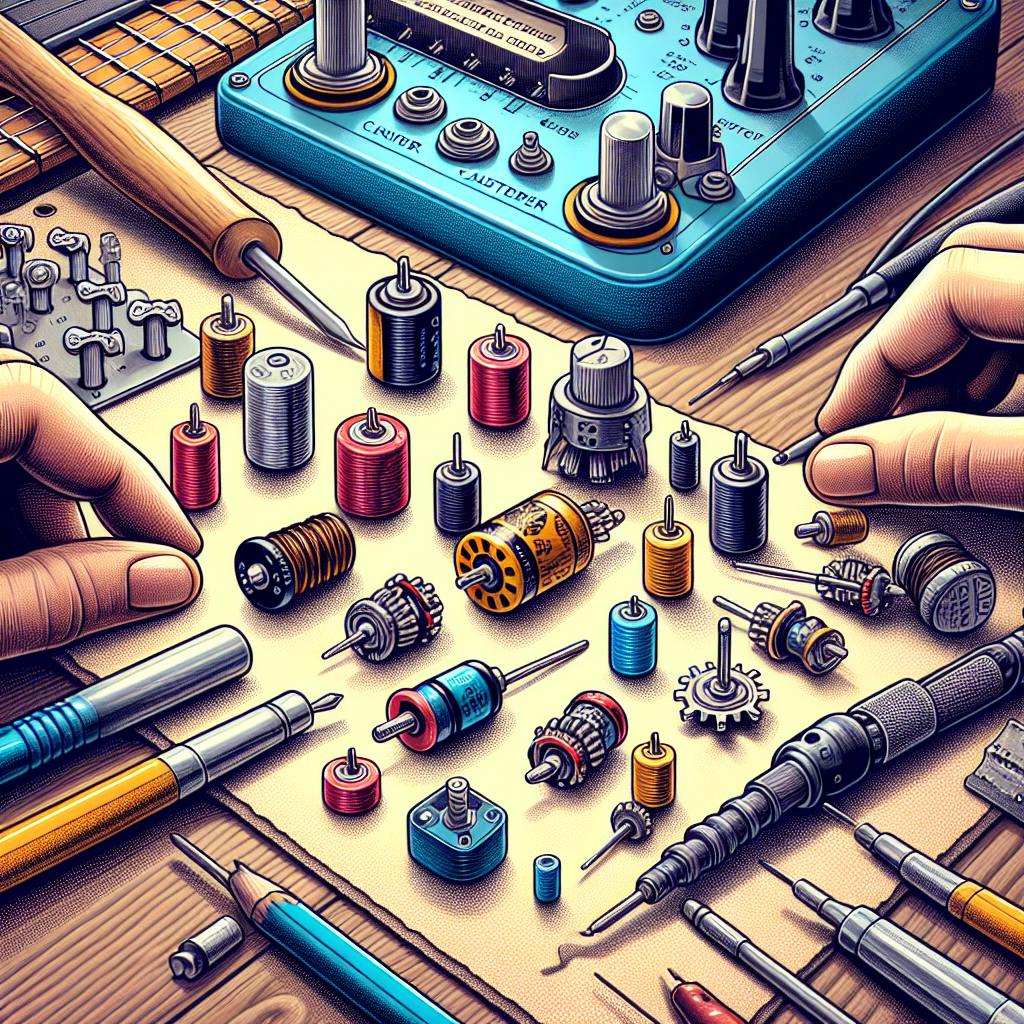
Top 5 Tone Capacitors That Will Transform Your Guitar’s Sound
When it comes to achieving the perfect sound from your guitar, the right tone capacitor can make all the difference. Selecting the appropriate tone capacitor is crucial to shaping your instrument’s voice and adapting its sound to suit your personal style and genre. In this comprehensive guide, we’ll deep dive into everything you need to know about tone capacitors, exploring the top five options and how they can transform your guitar’s sound.
Understanding Tone Capacitors
Tone capacitors play a vital role in your guitar’s tone circuit by filtering the high frequencies when you adjust your tone pot. This capability allows you to tailor your sound, making your instrument far more versatile. Interestingly, the value and type of capacitor you choose can significantly affect your guitar’s timbre, either enhancing or diminishing your tonal range.
Top 5 Tone Capacitors
1. Orange Drop Capacitors
Known for their bright and articulate sound, Orange Drop capacitors are highly favored among musicians seeking clarity. Their consistency and craftsmanship make them a popular choice for both beginners and professionals. With their distinctive look and feel, these capacitors often lend themselves to vintage-style guitars.
2. Oil and Paper Capacitors
These capacitors deliver a warm, vintage tone that attracts blues and jazz guitarists. The smooth and rounded sound they provide often enhances the expressive dynamics in a guitarist’s play. They are, however, larger and more expensive but are worth the investment for their superior tonal quality.
3. Mylar Capacitors
Praised for their durability and affordability, Mylar capacitors are versatile and can suit many musical genres. They offer a balanced sound but do not particularly excel in one tonality; instead, they present a middle ground for versatile playing. Musicians looking for a budget-friendly option often turn to Mylar capacitors for their reliability.
4. Ceramic Disc Capacitors
Ceramic disc capacitors are often found in lower-end models due to their lower cost. They can lend a bright and cutting tone, suitable for certain types of music, albeit at the cost of the warmth and depth that more expensive capacitors offer. They are a good starting point for players experimenting with tone adjustments.
5. Silver Mica Capacitors
Renowned for their precision and high-end performance, Silver Mica capacitors cater to guitarists who demand nothing less than the best. They produce a clear, detailed signal perfect for genres requiring nuanced articulation. Their sound clarity is unparalleled, making them ideal for professional musicians.[Learn more about the best tone capacitors here].
FAQs About Tone Capacitors
1. What does a tone capacitor do in a guitar?
A tone capacitor works in tandem with the tone control knob to roll off the high-end frequencies, allowing you to adjust the tonal quality of your guitar’s output. The capacitor’s value determines the roll-off frequency, thereby shaping the overall sound.
2. Does the type of tone capacitor really affect sound?
Yes, the type and value of a tone capacitor can significantly impact the tonal characteristics of your guitar. Different materials can resonate differently, affecting warmth, clarity, and richness of the sound.
3. How do I choose the right tone capacitor for my guitar?
Your choice depends on your personal sound preference and the style of music you typically play. To achieve brighter treble, you might opt for an Orange Drop, while an Oil and Paper capacitor might suit a warmer, vintage sound preference.
4. Are expensive tone capacitors worth the investment?
The investment value depends on the player’s needs. High-end capacitors like Oil and Paper or Silver Mica provide superior sound quality but are not necessary for everyone. Evaluate the sound difference in your context before upgrading.
5. Can I replace a tone capacitor myself?
If you have basic electronics skills and tools, you can replace the tone capacitor yourself. However, if you are not comfortable soldering, it’s best to consult a professional technician to avoid damaging your guitar.
6. What value tone capacitor should I use?
The most common values are .022µF for humbuckers and .047µF for single-coil pickups. These values provide a good balance for most guitars but experimenting with different values can help fine-tune your ideal sound.
Conclusion
Choosing the right tone capacitor is critical to honing your guitar’s sound to perfection. With options ranging from bright and clear to warm and rich, understanding the characteristics of each capacitor type can guide you toward making an informed decision. Whether you’re a novice or a seasoned pro, experimenting with tone capacitors could unlock your instrument’s full potential and elevate your performance.
Remember, the journey to finding your perfect tone is unique, and a little exploration could very well lead you to the sound you’ve been looking for!