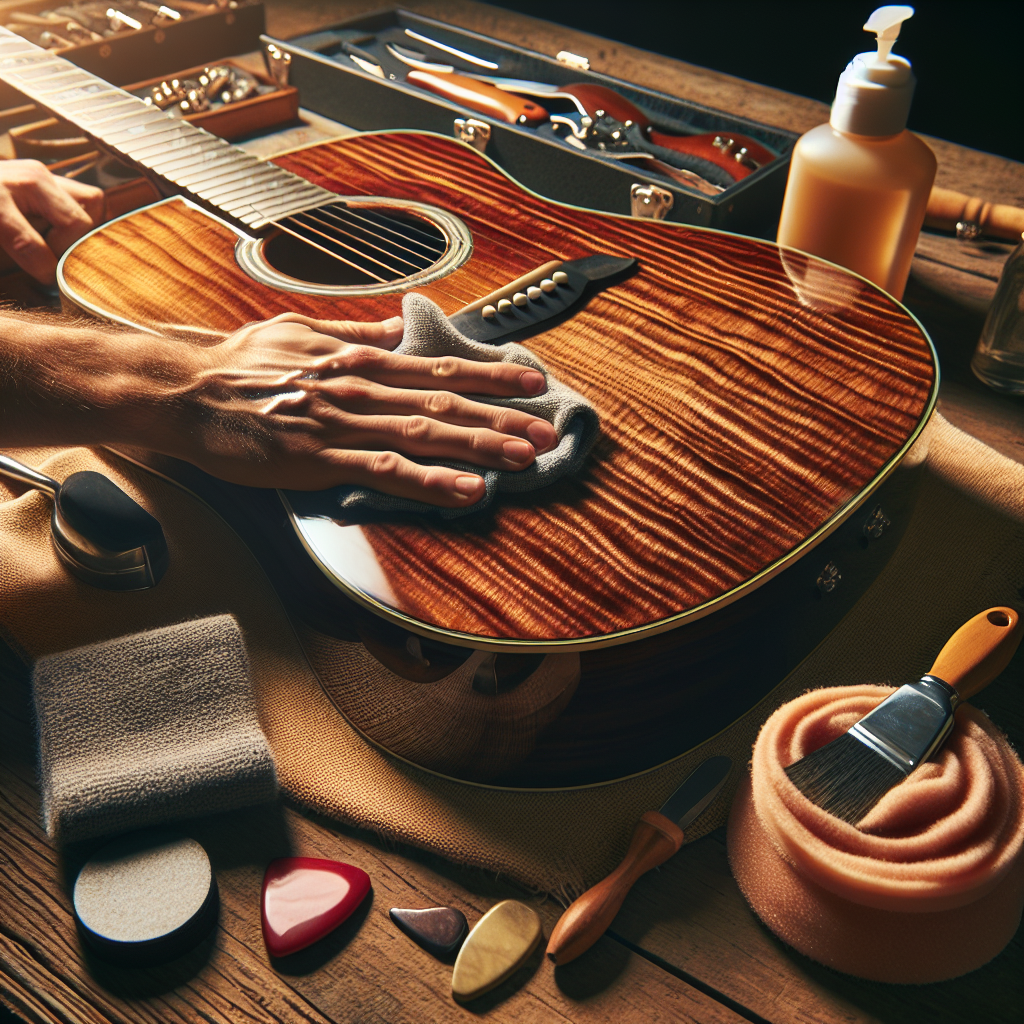
7 Essential Steps to Polish a Guitar Body Without Damaging the Finish
Owning a guitar means more than just playing it; it also involves maintenance to ensure longevity and performance. One question that often comes up among guitar enthusiasts is how to polish a guitar body without damaging the finish. The finish is a critical part of your guitar that not only enhances its appearance but also protects the wood. Thus, maintaining it well is crucial. This guide will walk you through seven essential steps to polish your guitar body without causing any harm to the finish.
1. Gather the Right Materials
Before starting, it is essential to gather all the materials you’ll need for a successful polish. These include a microfiber cloth, guitar polish specifically designed for your guitar’s finish type, and a small, soft-bristled brush. Avoid using paper towels or regular cloths, as they can scratch the surface.
2. Understand Your Guitar’s Finish
Guitars come with different finishes like nitrocellulose lacquer, polyurethane, and polyester. Understanding the type of finish will help you choose the right polish. For instance, nitrocellulose finishes might require a milder polish compared to polyurethane. Always check the guitar manufacturer’s recommendations.
3. Remove the Strings
To ensure that all areas of the guitar are accessible, remove the strings first. This step also makes it easier to prevent any accidental scratching or dirt spreading from the strings onto your guitar body as you polish.
4. Dust and Clean the Surface
Use a soft-bristled brush or a dry microfiber cloth to gently remove any dust or debris from the surface. Be careful around delicate areas like the pickups and bridge, as these can accumulate dirt. Avoid using water or any harsh chemicals during this step.
5. Apply the Guitar Polish
Squeeze a small amount of guitar polish onto the microfiber cloth, not directly onto the guitar. Carefully rub the polish in circular motions over the guitar’s body. This technique helps avoid streaks and ensures even coverage. Take your time and focus on one section at a time.
6. Buff the Guitar
After applying the polish, use a clean, dry microfiber cloth to buff the guitar body. Use light, circular motions until the polish is fully absorbed and the guitar begins to shine. Buffing not only enhances the guitar’s looks but also creates a protective layer on the finish.
7. Re-string and Final Inspection
Once your guitar shines as desired, re-install the strings. Check each area to ensure no residue is left, especially around the bridge and close to the neck. Handle the guitar with clean hands to avoid leaving fingerprints on your newly polished instrument.
FAQs
1. Can I use regular furniture polish on my guitar?
Using furniture polish is not advised, as it may contain chemicals that could harm the guitar’s finish. Always opt for a polish specifically formulated for musical instruments.
2. How often should I polish my guitar?
It depends on how frequently you use it and the environment it’s kept in. Generally, polishing it every few months should suffice, or whenever you notice it losing its shine.
3. What if my guitar has a matte finish?
For matte finishes, use a polish suited for satin surfaces to maintain the intended look without adding an unwanted gloss.
4. Can polishing improve the sound of my guitar?
Polishing primarily improves the appearance and protects the finish. While it doesn’t directly affect sound, a well-maintained finish can preserve the guitar’s overall quality, indirectly supporting sound quality over time.
5. Are there any tools I should avoid using?
Avoid high-speed buffing tools and abrasive materials, as they can easily damage the finish.
6. Is it necessary to remove the strings?
While not mandatory, removing the strings provides better access and reduces the chance of dirt build-up being spread across the guitar body.
Conclusion
Polishing your guitar isn’t just about aesthetics; it’s a maintenance step that preserves your instrument’s integrity and quality. With a little care and the right products, you can keep your guitar looking and performing its best without risking damage to its finish. For more detailed guidance on guitar care, consult reputable resources like Fender’s guitar care tips. Remember, taking good care of your guitar translates to sustainment of its sound and extend its lifespan. Take a moment today to give your guitar the attention it deserves, and enjoy the rewards for years to come.