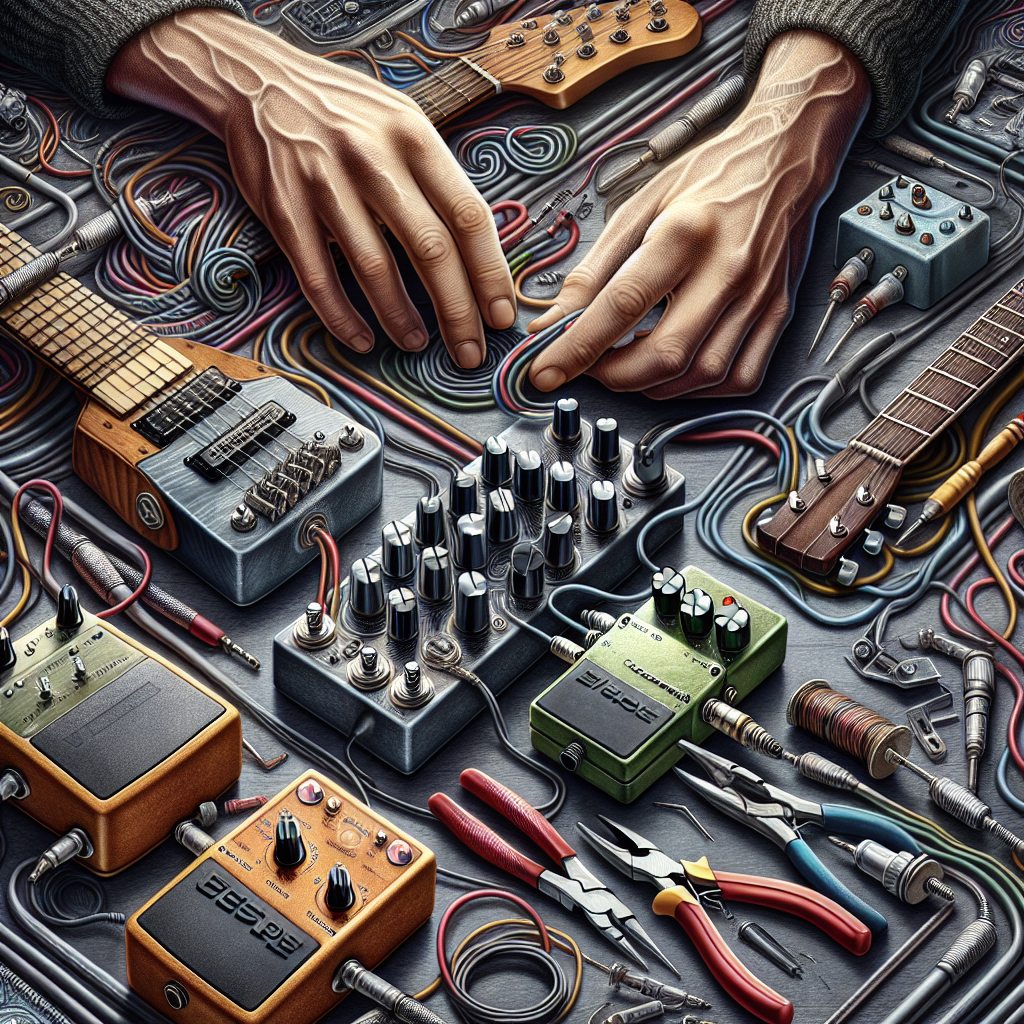
Understanding Impedance: 7 Essential Insights into Guitar Cables and Pedals
Imagine being at a live concert where the guitarist’s sound is crystal clear, resonant, and vibrant, capturing every nuance of their performance. One of the secrets behind such sonic excellence lies in understanding impedance in guitar cables and pedals. By grasping how impedance affects your gear, you can significantly enhance your guitar tone and overall sound quality. Dive into this guide as we unravel the mysteries of impedance, exploring its impact on your music.
1. What is Impedance?
Impedance is essentially the resistance to the flow of an electric current. It’s measured in ohms (Ω) and plays a crucial role in audio equipment, especially in guitars, cables, and pedals. Impedance affects how signals travel through a circuit and can greatly influence the sound quality of your guitar setup. Understanding impedance can lead to better pairing of equipment and ultimately, a superior sound.
2. The Importance of Impedance Matching
Impedance matching is all about ensuring that the output impedance of one device equals the input impedance of the next device in your signal chain. This alignment allows maximum power transfer and minimizes signal loss or reflection. Mismatched impedance can lead to a loss in signal fidelity, potentially diminishing the quality of your music. Hence, knowing the impedance specifications of your pedals, cables, and amplifier is vital for optimizing your setup.
3. High vs. Low Impedance
Guitar pickups generally have high impedance, typically ranging from 5kΩ to 15kΩ. High impedance cables and inputs are designed to complement these pickups. On the other hand, professional audio equipment often utilizes low impedance for reduced noise and better long-distance signal transfer. Recognizing whether your guitar gear is high or low impedance will help in selecting compatible components and achieving the best sound quality.
4. Choosing the Right Cable
When selecting a guitar cable, the impedance can affect tone. A high-impedance cable with a significant length may cause tonal losses, particularly in the treble frequencies, due to capacitance. Low-impedance cables, however, are generally more immune to these losses. Therefore, factors such as cable length and your specific gear’s impedance ratings are pivotal when choosing the right cable for your setup.
5. Impedance in Pedals
Pedals each have their impedance levels, which can color your sound based on their placement in the signal chain. An input buffer pedal, for example, can convert high impedance to a lower impedance signal, reducing tone suck across longer cables and numerous pedals. It’s essential to consider pedal impedance when assembling your pedalboard to maintain sound integrity.
FAQs
1. How does impedance affect the tone of a guitar?
Impedance influences how well signals travel through the components, affecting tone. High-impedance mismatches can lead to signal loss and reduced sound quality, while low impedance can enhance clarity over long cable runs.
2. Why are some guitar cables labeled as “low impedance”?
Low impedance cables are engineered for minimal signal loss and interference. They’re ideal for professional settings where long cable runs are common, providing clearer sound output.
3. What is the role of a buffer pedal in a signal chain?
A buffer pedal reduces impedance mismatches within a signal chain, maintaining signal strength and tone clarity across multiple pedals and lengthy cables.
4. Can using the wrong impedance cable damage my gear?
While using a mismatched impedance cable likely won’t damage your gear, it can degrade sound quality and affect tone, leading to a less than optimal audio experience.
5. How can I measure impedance in my gear?
Impedance can be checked using a multimeter or by consulting the specifications in your equipment’s manual. Online forums and manufacturer websites can also be helpful resources.
6. Do guitar cables have a directional orientation based on impedance?
Most guitar cables are not directional in terms of impedance. However, some high-end cables are designed with a directionality meant to optimize signal flow directionality, though this is a subject of debate among audiophiles.
Conclusion
Understanding impedance in guitar cables and pedals is key to unlocking the full potential of your sound. Impedance affects every component in your signal chain, from the guitar itself to the amp. By mastering impedance matching and making informed choices in gear, you can ensure that your guitar’s tone is as rich and dynamic as you desire. Remember, a little technical know-how goes a long way in achieving incredible sound quality. Whether you’re a studio professional or a live performer, prioritizing the impedance of your gear will lead you to sonic success. For a comprehensive guide on audio impedance, check out [Sound on Sound’s article on Impedance](https://www.soundonsound.com/sound-advice/q-what-does-impedance-mean-practice).