Understanding Capacitor Types for Guitar Tone Circuits: 5 Must-Know Facts
Guitarists looking to fine-tune their instrument’s sound often dive into the world of tone circuits, where capacitors play a pivotal role. Understanding which capacitor types are best can significantly enhance your guitar’s tonal quality. In this article, we’ll explore five key aspects of guitar tone capacitors, delve into their impact on sound, and address common questions to help you make informed choices.
1. The Role of Capacitors in Guitar Tone Circuits
Capacitors in guitar tone circuits are essential components that influence the instrument’s sound by affecting the frequency response. When you adjust your tone knob, you’re typically interacting with a capacitor that filters out high frequencies, giving you a warmer tone.
Understanding how these components work is crucial for customizing your sound. Capacitors store and release electrical energy, and in a tone circuit, they primarily focus on cutting treble frequencies, shaping the sound that ultimately reaches your amplifier.
2. Types of Capacitors Used in Guitar Tone Circuits
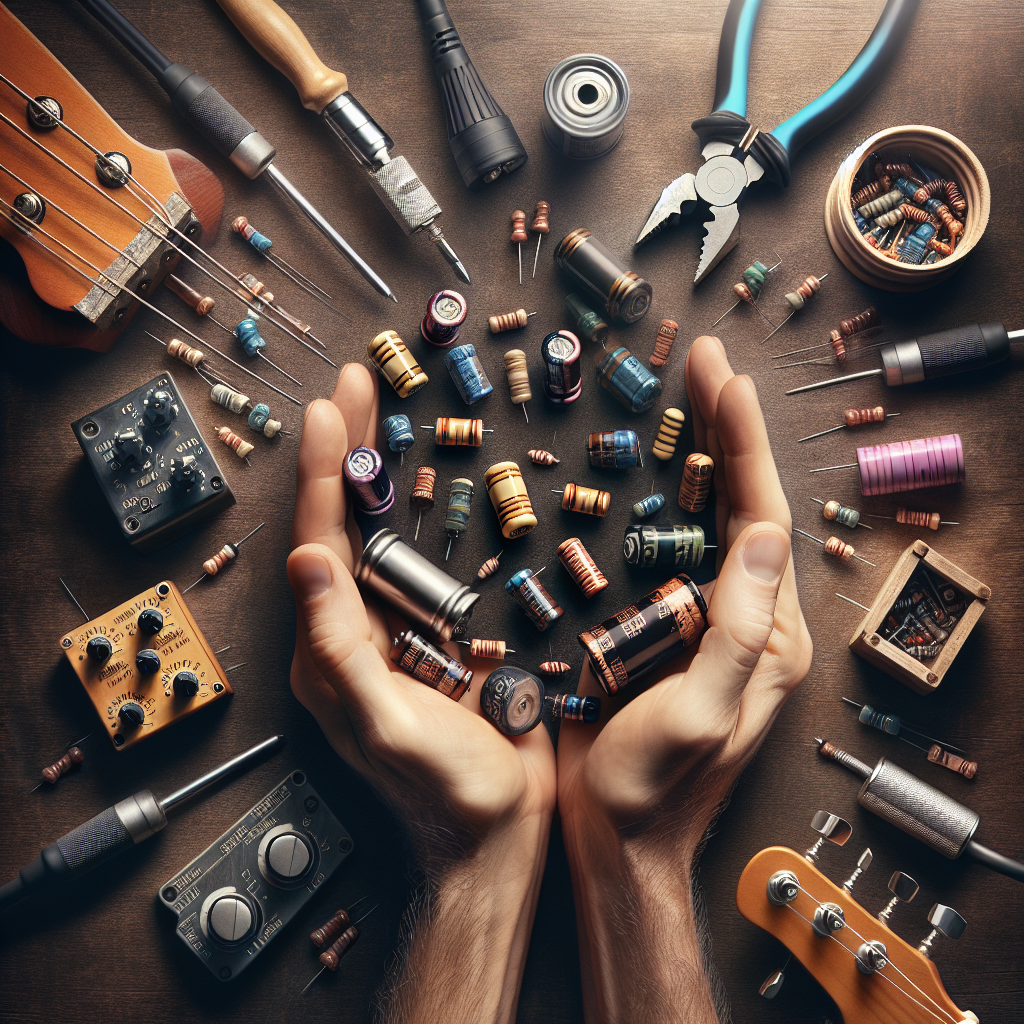
The type of capacitor you use can markedly change your guitar’s tone. Common types include:
- Ceramic Capacitors: Known for their affordability and reliability, these capacitors can give your guitar a bright, clear tone.
- Polyester Film Capacitors: These provide a warm, balanced tone and are favored by many vintage guitar enthusiasts.
- Paper in Oil Capacitors: Often found in high-end guitars, they are cherished for their smooth and musical tonal properties.
- Metal Film Capacitors: Known for minimal noise and high precision, they are used in specialty guitars seeking clean sound.
3. Capacitor Values and Their Impact on Tone
The value of a capacitor, measured in microfarads (µF), is just as important as its type. Common values seen in tone circuits are 0.047µF and 0.022µF. A larger value capacitor (like 0.047µF) will cut off more treble, resulting in a warmer tone, while a smaller value (such as 0.022µF) retains more high frequencies for a brighter sound.
Experimenting with different capacitor values allows players to customize their sound to their specific preferences, whether aiming for a classic rock tone or a smooth jazz sound.
4. The Impact of Capacitor Quality
Beyond type and value, the quality of the capacitor can greatly affect performance. High-quality capacitors typically offer improved reliability and more consistent sound. They can also provide better dynamic response, making subtle nuances more pronounced during play.
5. Selecting the Right Capacitor for Your Guitar
Your choice of capacitor should reflect the kind of music you play and the tone you desire. Here’s a simple guide:
- If you prefer clear, cutting tones, ceramics are a good bet.
- For a warm, vintage sound, look towards polyester film or paper in oil types.
- For precision and minimal noise, metal film capacitors are the way to go.
FAQs
Q1: Why are there different types of capacitors used in guitars?
A1: Different types of capacitors influence the guitar’s tone in unique ways—each affecting the warmth, brightness, and clarity of the sound. Players choose based on personal preference and musical style.
Q2: How do I change the capacitor on my guitar?
A2: Changing a capacitor requires some soldering skills. First, remove the guitar’s back plate and locate the tone capacitor connected to the tone pot. Using a soldering iron, carefully remove the current capacitor and replace it with the new one. Always consult a professional if you’re unsure.
Q3: What capacitor value is best for metal music?
A3: Many metal guitarists prefer smaller value capacitors like 0.022µF, as they tend to allow more high-end frequencies, which can better cut through the mix.
Q4: Can I mix different capacitor types in my guitar?
A4: Yes, you can mix different types of capacitors, but remember each type has its tonal characteristics. The resulting tone will depend on each type’s proportionate impact on the circuit.
Q5: Does the capacitor type affect the guitar’s clean tone?
A5: Absolutely. While it’s more noticeable in overdriven settings, the capacitor can significantly shape the clarity and presence of a clean tone.
Q6: Is there a universal capacitor that fits all styles?
A6: There’s no one-size-fits-all capacitor, as tone is highly subjective. It’s about experimenting with different types and values to find a combination that suits your ear and style the best.
Capacitors are subtle yet powerful components that can dramatically influence your guitar’s sound. Understanding the types and nuances of these tiny components empowers you to tailor your instrument’s tone to perfection.
For further insights and a deeper dive into the technical aspects of capacitors in guitar tone circuits, check out this detailed resource from Premier Guitar.
By choosing the right combination of capacitor type and value, you can achieve a customized sound that truly resonates with your playing style. Now that you’re armed with the know-how, the next step is to explore and experiment. Happy playing!